National Monuments
Like National Parks, these areas are protected by the government. However, they receive less funding and are not as protective of wildlife, as the original idea was to protect small, historical areas. The president can declare an area a National Monument without Congressional approval. National monuments may be managed by the National Park Service, but many are managed by other agencies such as the USDA Forest Service, the United States Fish and Wildlife Service or the Bureau of Land Management.
Philadelphia,
Pennsylvania
Located in the the Franklin Institute Science Museum, the National Memorial features a 20 feet (6m) tall statue of Benjamin Franklin sculpted by James Earle Fraser between 1906 and 1911.
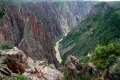
Grizzly Ridge,
Colorado
This unique and spectacular landscape was formed slowly by the action of water and rock scouring down through hard Proterozoic crystalline rock. No other canyon in North America has such narrow opening, sheer walls, and startling depths.
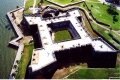
Saint Augustine,
St. John's County,
Florida
Built between 1672 and 1695, Castillo de San Marcos was the first masonry fort constructed to defend Saint Augustine. It was known as Fort St. Mark from 1763 until 1784 while under British control and Fort Marion from 1821 until 1942.
Iron County County,
Utah
Cedar Breaks National Monument is a U.S. National Monument located in the U.S. state of Utah near Cedar City. Cedar Breaks is a natural amphitheater, stretching across 3 miles (4.8 km), with a depth of over 2,000 feet (610 m).
Fruita,
Mesa County,
Colorado
The area was established as Colorado National Monument on May 24, 1911. To ensure protection of the canyons, President William Howard Taft used the the Antiquities Act and a presidential proclamation to declare the canyons as a national monument.
Arco,
Butte County,
Idaho
The Craters of the Moon National Monument was established on May 2, 1924. In November 2000, a presidential proclamation by President Clinton greatly expanded the Monument area.
Dinosaur,
Moffat County,
Colorado,
81610
This park contains fossils of dinosaurs. The rock layer enclosing the fossils is a ancient river bed from the Jurassic Period. The dinosaurs and other ancient animals were carried by the river system which eventually entombed their remains.
Uintah County,
Utah
President Woodrow Wilson proclaimed the dinosaur beds found in this park as Dinosaur National Monument in 1915. The monument boundaries were expanded in 1938 to its present size, including land in Utah and Colorado.
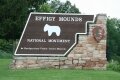
Clayton,
Iowa
Effigy Mounds National Monument preserves more than 200 prehistoric mounds built by Native Americans including numerous effigy mounds shaped like animals, including bears and birds.
New York,
New York
Between 1892 and 1954, over 12 million European immigrants passed through the processing station at Ellis Island. Today, the island is home to a museum dedicated to immigration and the idea of seeking a new and better life in America.
Baltimore,
Maryland,
21230
During the Battle of Baltimore in 1814, a lawyer named Francis Scott Key was watching the U.S. flag wave over Fort McHenry. He was inspired to write a poem called the "Star-Spangled Banner."
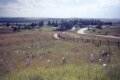
Crow Agency,
Big Horn County,
Montana,
59022
This monument is dedicated to the men who died in the battle of the Little Bighorn. It was build in 1881 making it the oldest national monument in the country.
Mill Valley,
California,
94941
Muir Woods National Monument is a unit of the National Park Service on Mount Tamalpais near the Pacific coast, in southwestern Marin County, California. It is part of the Golden Gate National Recreation Area, and is 12 miles (19 km) north of San Francisco
Yellowstone County,
Montana,
59088
Pompeys Pillar National Monument is a rock formation. The pillar itself stands 150 feet (45 m) above the Yellowstone River and consists of sandstone from the late Cretaceous Hell Creek Formation, 75 - 66 million years ago.
New Mexico
This New Mexico site comprises the southern part of a 275 square miles (710 km
2) field of white sand dunes composed of gypsum crystals. Gypsum is rarely found in the form of sand because it is water-soluble.